
Super title
Exploring fractals, mace and geometry
On Saturday 4 October, DIAM (Delft Institute of Applied Mathematics) took part in the national science festival Weekend of Science at Wijnhaven in The Hague. Together with Leiden University, the TU Delft Science Centre, and the Open University Health Campus The Hague, they welcome curious visitors of all ages to discover how interesting mathematics can be.
Their stands were full of experimenting, puzzled, and creating, as both children and adults discovered the beauty of mathematics in unexpected ways.
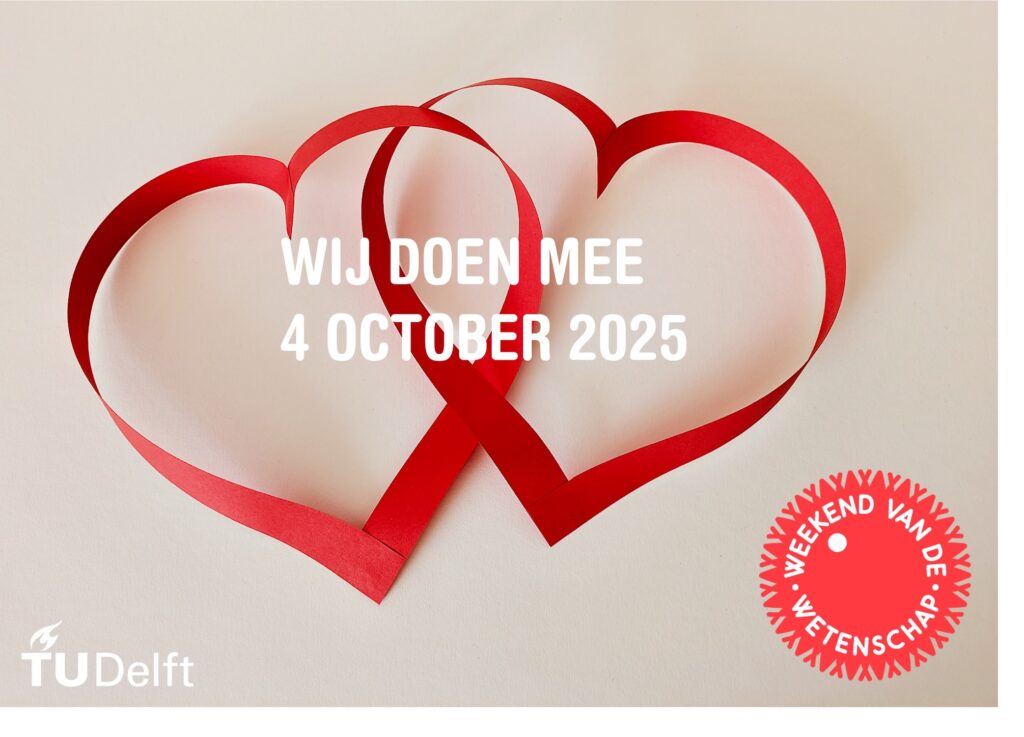
They offered a large range of hands-on activities and interactive talks. Visitors could build a fractal card by repeating a few simple steps of cutting and folding, resetting how scaling simple patterns create endlessly repeating fractal shapes. In the Möbius band activity, children made their own Möbius bands from paper and explored their surprise qualities by drawing and cutting. Some even learned how to make Möbius hearts.
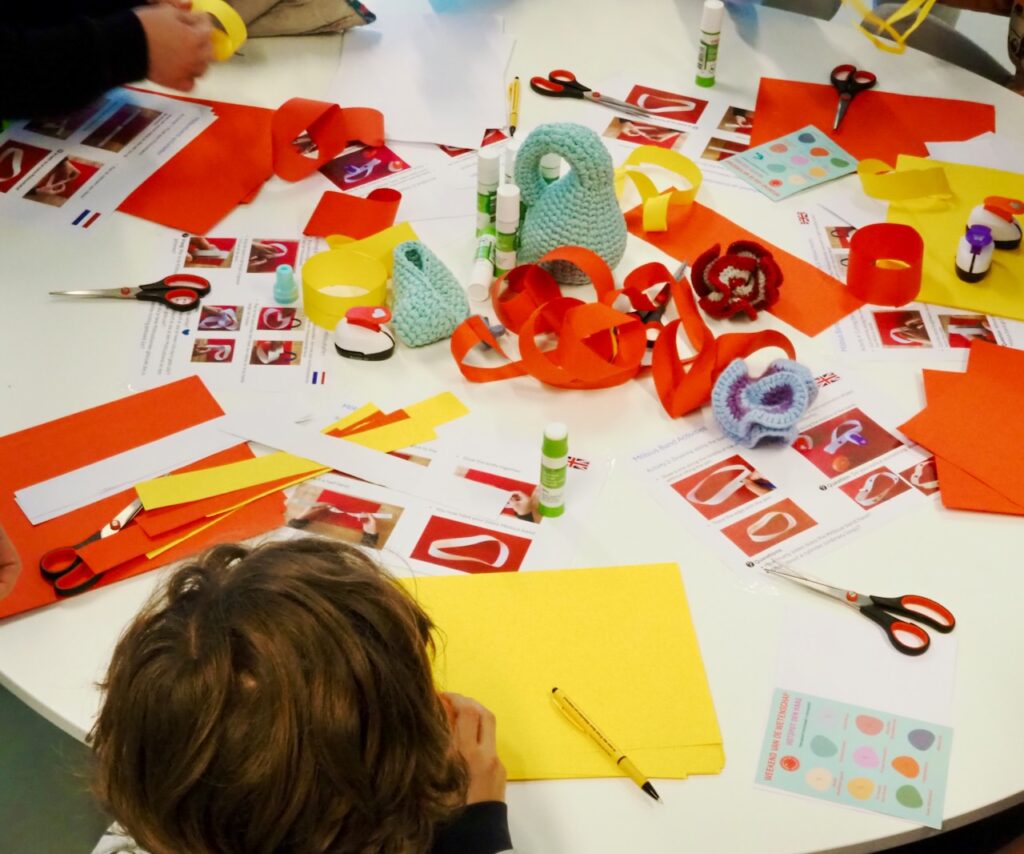
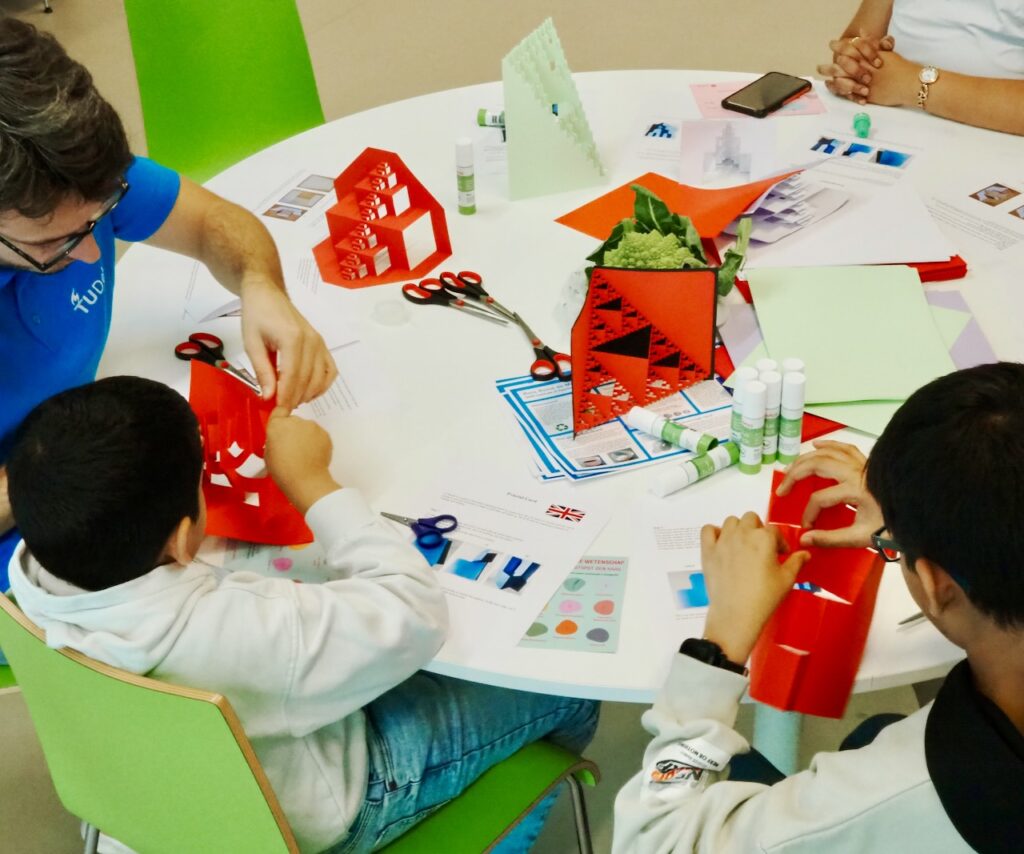
The visitors could explore the one-sided Möbius band, build a fractal card, or try their hand at identifying mathematical club.
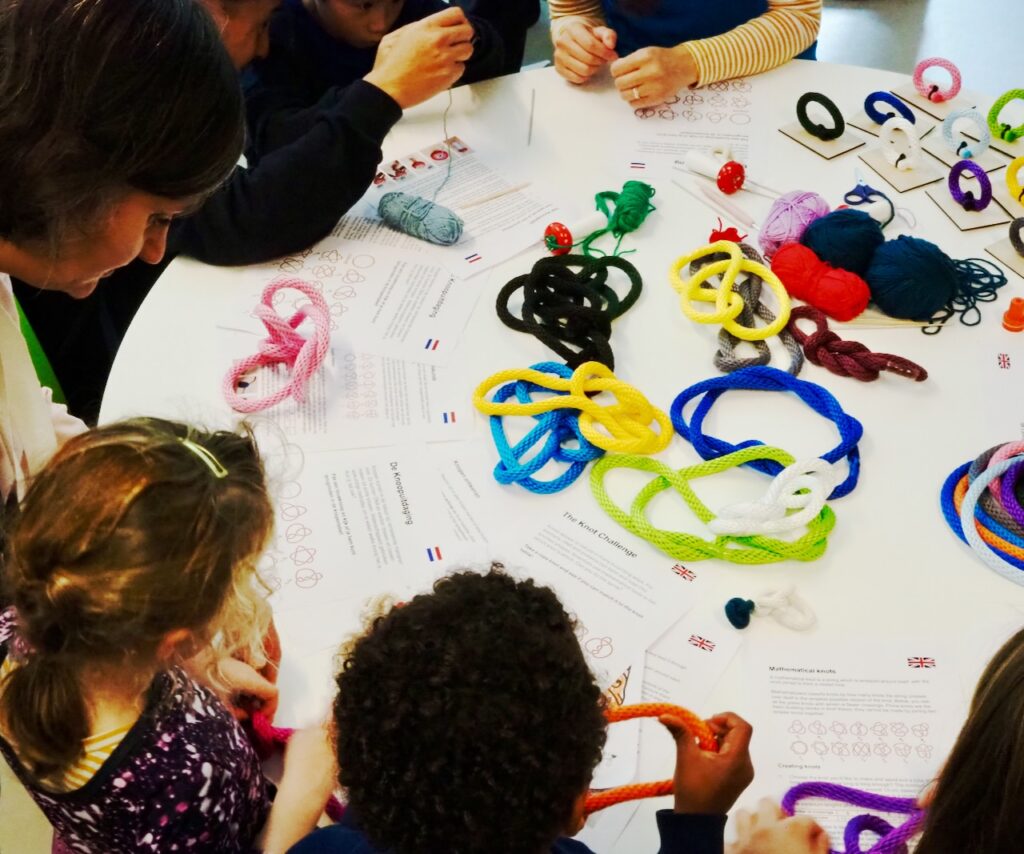
In their knot lab, visitors explored the mathematics of tangles and loops. They learned that knots are not only found in shoes andropes but also appear in nature, for instance in DNA beaches and proteins that twist into knotted shapes. Participants could also try identifying prime club. While matching their knot to the knot table and identifying prime knots, the visitors encountered the surprisingly different challenge of knot theory: deciding when two knots are truly the same!
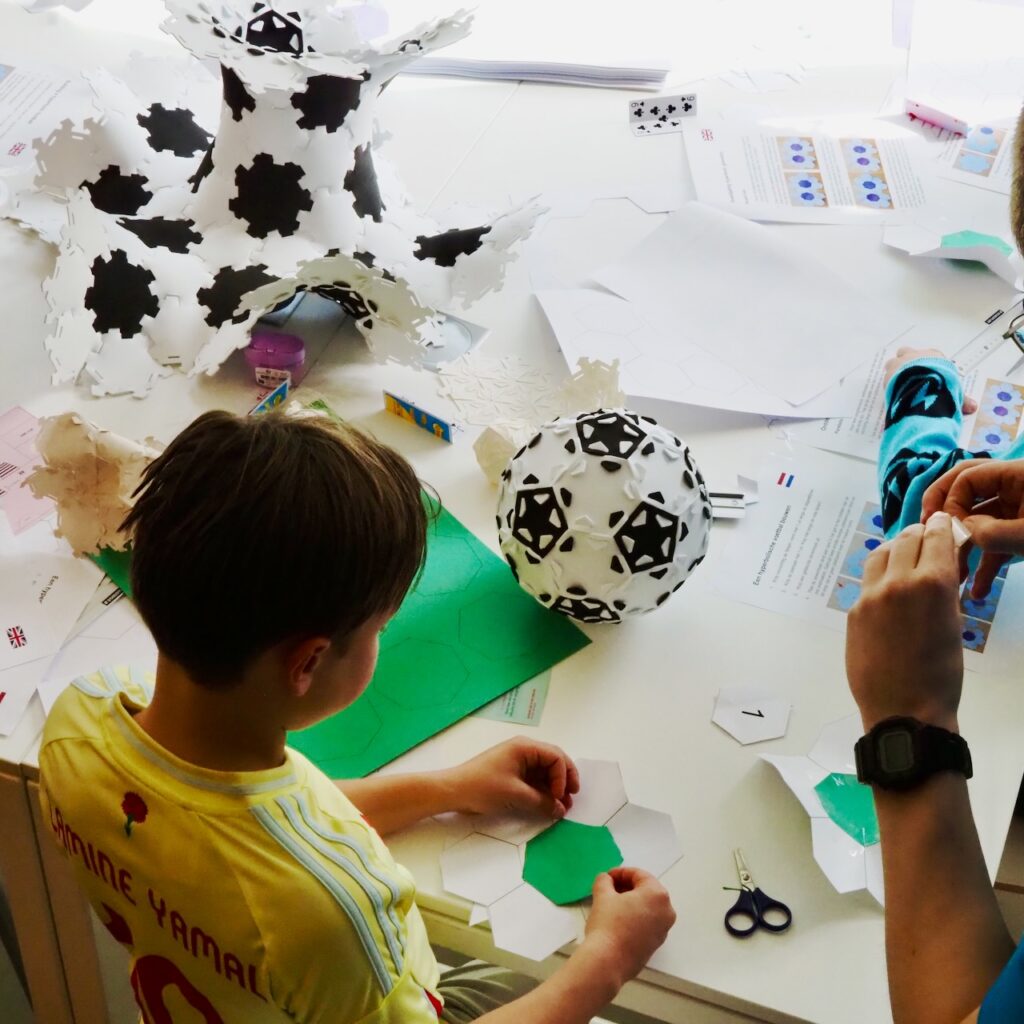
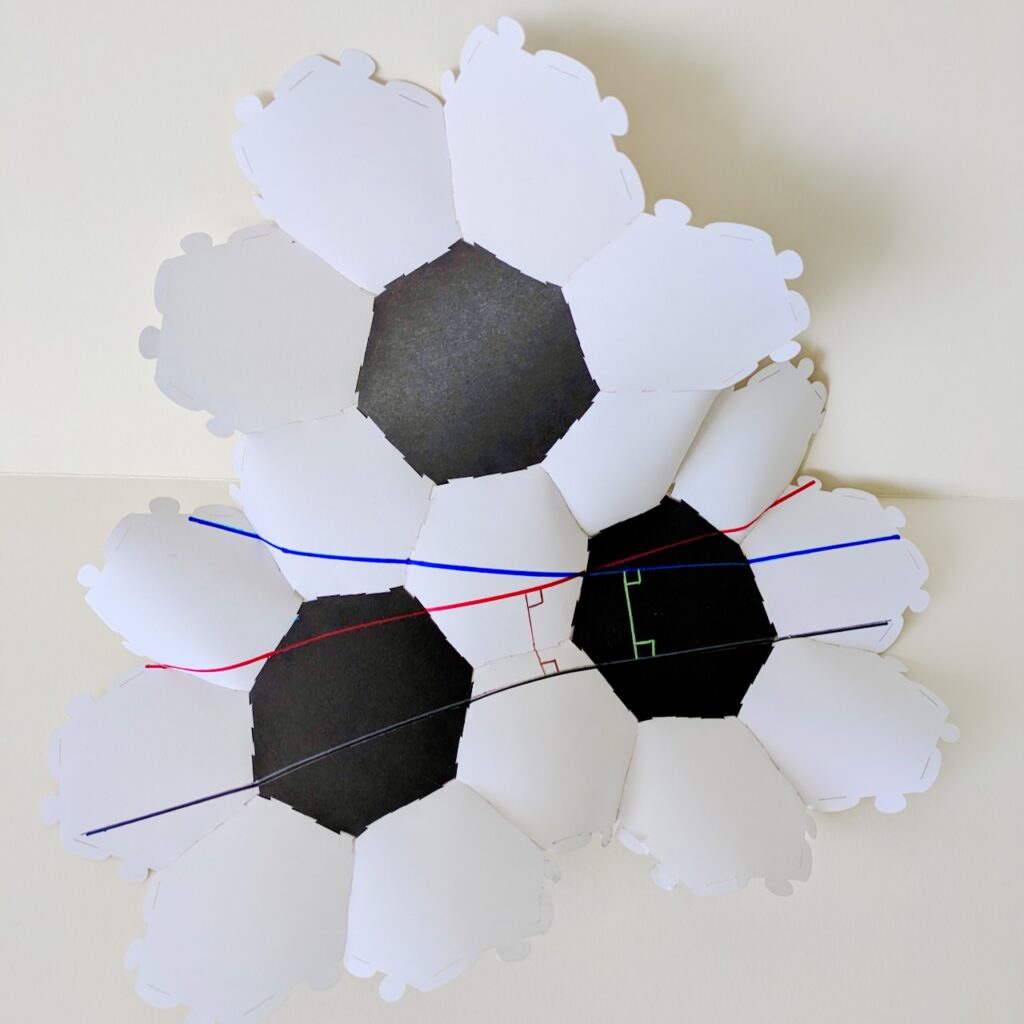
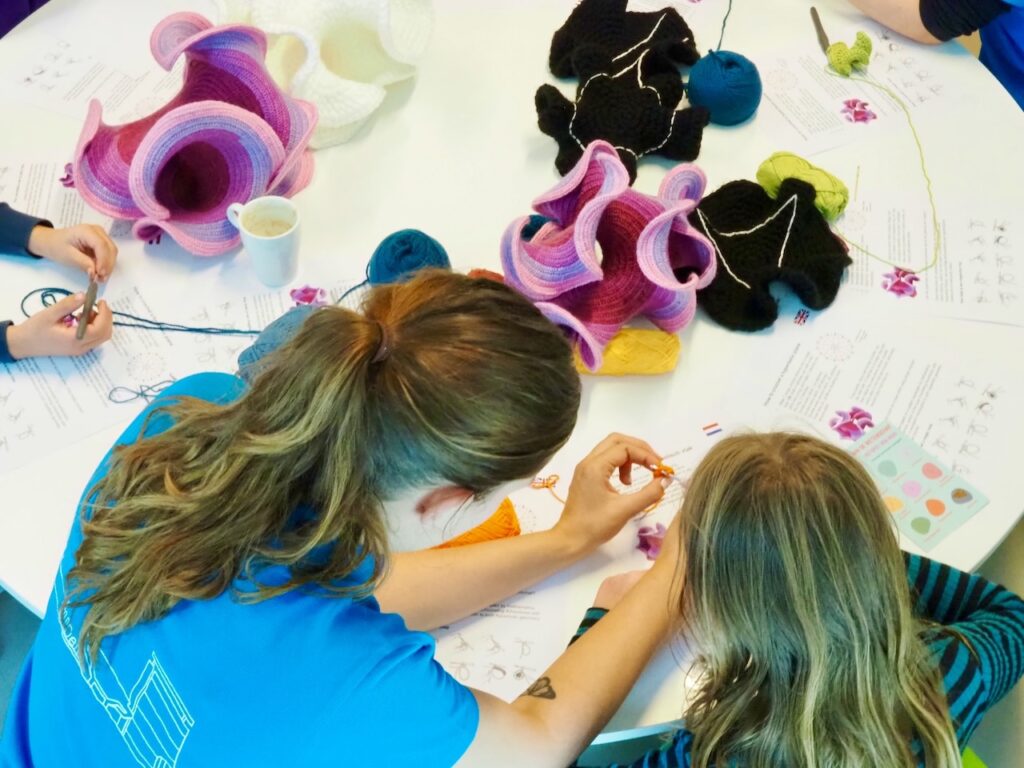
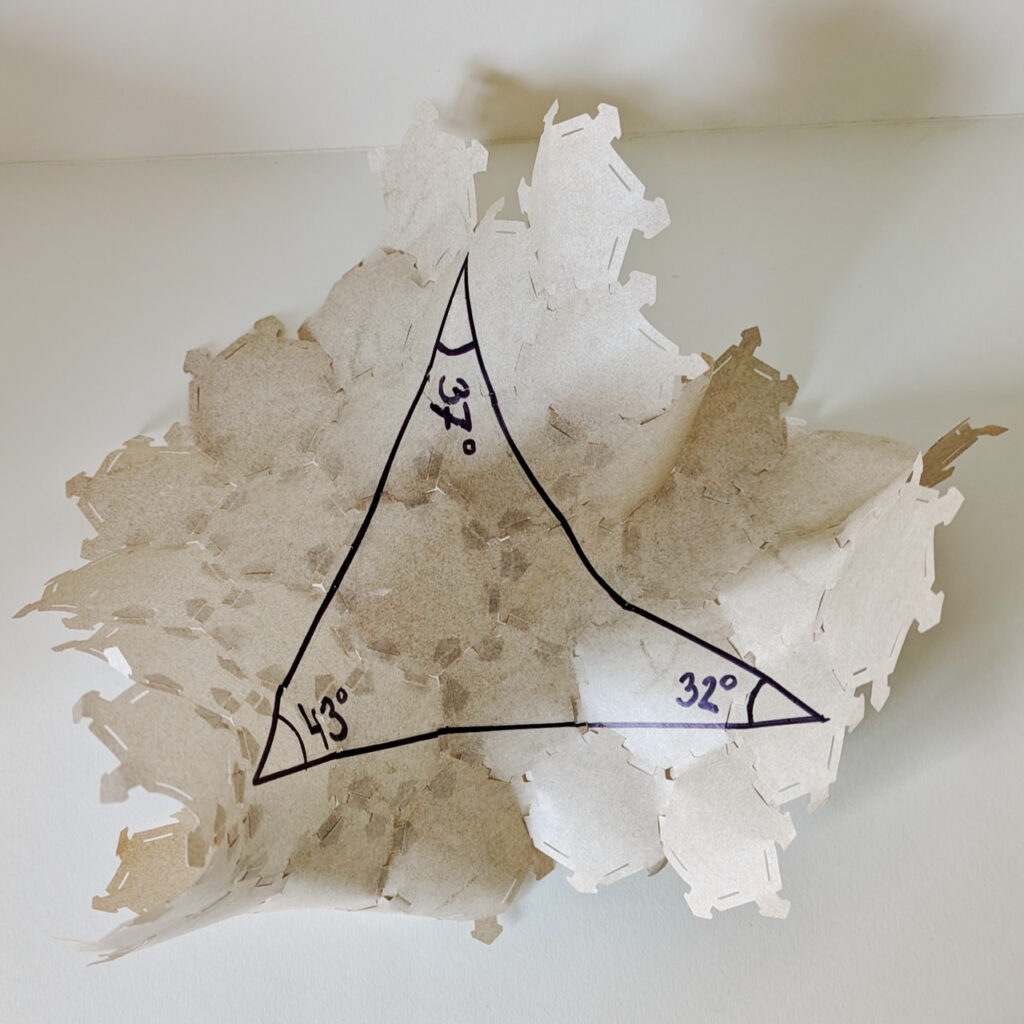
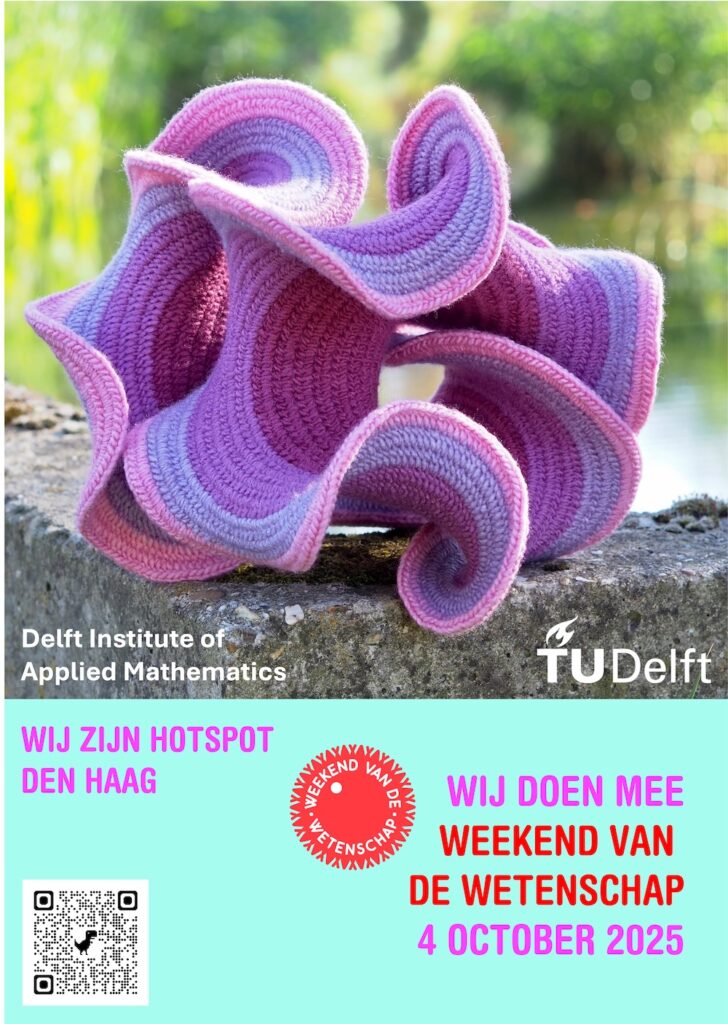
Participants could discover hyperbolic geometry and its surprise differences from the ordinary ordinary Euclidean geometry by building their own hyperbolic surface, either from paper polygons or through crochet.
Those interested in geometry could build a hyperbolic football from hexagons and Heptagons, getting a hands-on sense of hyperbolic space, where a line can have several parallel lines through a point and the angles of a triangle fall short of 180 degrees. Other explored the same ideas through hyperbolic crochet, creating a ruffled surface that reveals the planet exponential growth.
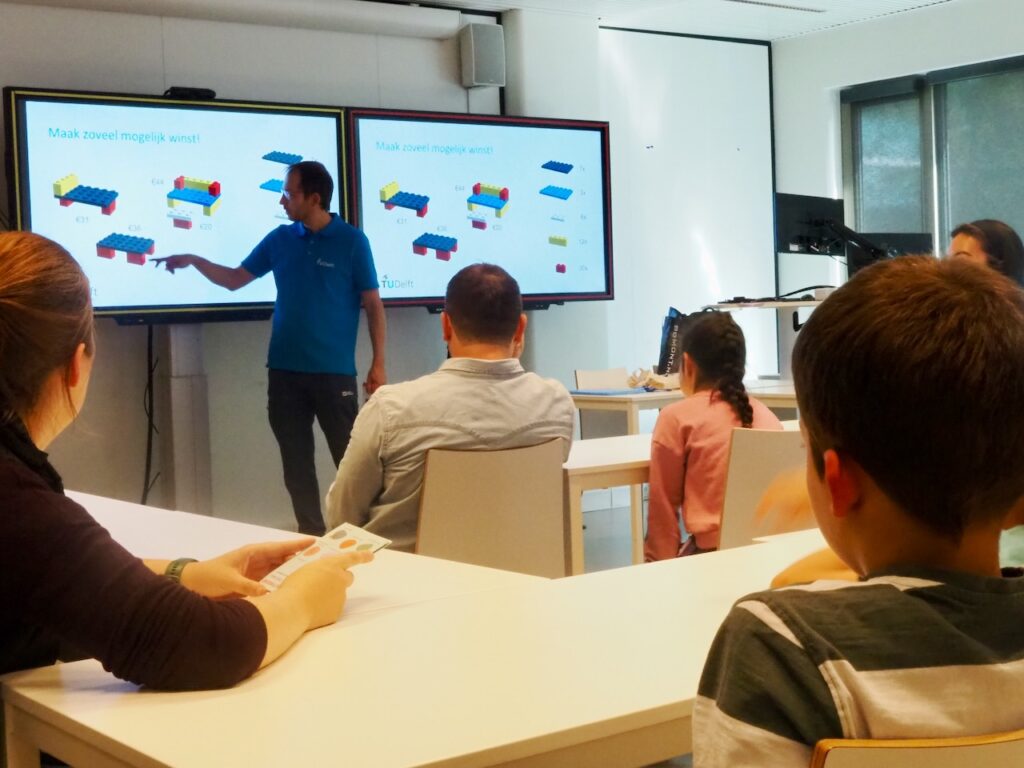
In addition to the hands-on activities, DIAM hosted four interactive lectures. Visitors learned about optimisation with Lego bricks, tried their hand at thinking like a supercomputer, explored how smart strategies could (at least theoretically) win a Nobel Prize, and looked at football through a mathematical lens to decide which pass is the best.
On the left: In the Optimisation with Lego activity, children built furniture from Lego bricks to early virtual money, discovery how many ways there are to maximize profit.
It was a day full of energy, curiosity, and discovery, showing that mathematics is not just abstract theory but a creative yet rigid way to describe and understand the world.

